Crime Scene Investigator Salary and Education Needed

BLS reports crime scene investigator salary under forensic science technicians (SOC 19-4092), who earned a median of $72,060 a year in May 2025. BLS says those technicians typically need at least a bachelor’s degree in physical science, biology or forensic science, and criminal justice is not among the fields it lists. The criminal justice route runs through a police department that employs sworn officers as crime scene investigators.
What BLS Calls a Crime Scene Investigator
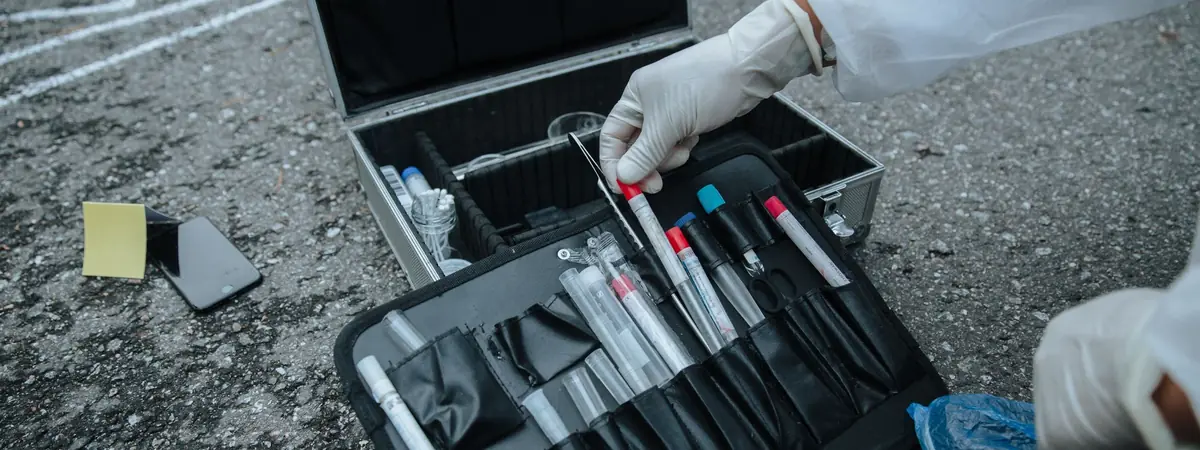
BLS has no occupation called crime scene investigator. It reports the job under forensic science technicians, who aid criminal investigations by collecting and analyzing evidence. Technicians often specialize in either crime scene or laboratory analysis, so every pay and outlook figure on this page describes both kinds together. Technicians who collect and store evidence from the scene of a crime are sometimes called crime scene technicians.
Some crime scene investigators who work for police departments are sworn police officers and have met the educational requirements necessary for admittance into a police academy.
BLS Occupational Outlook Handbook, Forensic Science Technicians
Crime Scene Investigator Salary: What the Job Pays
Forensic science technicians (SOC 19-4092) earned a median of $72,060 a year in May 2025, according to BLS’s Occupational Employment and Wage Statistics. The mean was $79,200, the middle half earned between $57,830 and $94,520, 10% earned less than $48,250 and 10% earned more than $117,250. BLS counted 19,120 of them in the survey.
| Percentile | Annual wage |
|---|---|
| 10th percentile | $48,250 |
| 25th percentile | $57,830 |
| Median | $72,060 |
| 75th percentile | $94,520 |
| 90th percentile | $117,250 |
| Mean | $79,200 |
Percentiles show where a technician falls in the range, not how long they’ve worked, so the 10th percentile isn’t a starting salary. Because the figures cover laboratory technicians as well as crime scene technicians, they’re a guide to the job family rather than a quote for one role.
Crime Scene Investigator Salary by Employer
Crime scene investigator salary also follows the employer. Local government accounts for 64% of forensic science technician jobs and state government for 27%. The handbook gives the May 2025 median for each.
| Employer | Median pay |
|---|---|
| State government | $74,740 |
| Local government | $70,050 |
Crime Scene Investigator Education: What BLS Names
Forensic science technicians typically need at least a bachelor’s degree to enter the occupation, and an associate’s degree may be sufficient for some positions. BLS lists physical science, biology and forensic science as the fields of study. Criminal justice is not one of the three, and BLS notes that forensic science technicians usually have a background in natural sciences.
The other door BLS describes runs through a police department. Some crime scene investigators who work for police departments are sworn police officers, and they have met the educational requirements to enter a police academy. Some departments ask for college coursework or a degree before the academy, and a criminal justice degree is one way to have it. The police officer guide walks through the screening and the academy.
How to Become a Crime Scene Investigator
- Choose between the two routes. One is a forensic science technician job, which starts with the degrees BLS lists. The other is a sworn officer’s job in a police department that assigns officers to crime scenes.
- Earn the degree. For the technician route, a bachelor’s degree in physical science, biology or forensic science, or an associate’s degree for some positions. For the sworn route, the education your department’s academy asks for.
- Train under experienced workers. Newly hired crime scene technicians may be supervised by experienced workers, who instruct them in procedures for collecting and documenting evidence.
- Pass the proficiency exam when you work cases alone. To perform independent casework, technicians may need to pass a proficiency exam through their state government or otherwise be approved by a laboratory or accrediting body.
- Add certifications if they help. A range of licenses and certifications is available to forensic science technicians. They typically are not required to enter the occupation but may demonstrate a specific skill.
What a Crime Scene Investigator Does
At crime scenes, forensic science technicians analyze the scene to decide what evidence should be collected and how, photograph and sketch it, record observations such as where evidence sat, collect evidence including weapons, fingerprints and bodily fluids, catalog and preserve it for crime labs, and reconstruct the scene. They may be called to testify in court about their findings and methods.
Crime scene technicians may travel throughout their jurisdictions. They may work staggered day, evening or night shifts and may have to work overtime, because someone must be available at all times to collect or analyze evidence.
Crime Scene Investigator Job Outlook Through 2035
BLS projects that overall employment of forensic science technicians will grow 13 percent from 2025 to 2035, much faster than the average for all occupations. About 2,800 openings a year are projected for the group, on average, over the decade.
In BLS's projections table, forensic science technicians have a row of their own: 20,100 jobs in 2025 and 22,800 projected for 2035, growth of 13 percent.
Degree Routes Toward Crime Scene Work
If the sworn-officer route is yours, a criminal justice degree is the usual college preparation, and these rankings compare the programs by cost, graduate earnings and four other factors. If you want the technician route, BLS points you to a science degree instead.
- Two-Year Degrees Associate Degree in Criminal Justice 683 ranked associate’s programs, scored on cost, graduate earnings and four other factors. BLS lists a bachelor’s degree as the typical entry education for forensic science technicians.
- Online Bachelor’s Degrees Online Criminal Justice Degree 187 ranked online bachelor’s programs, priced for an online student from another state. Median pay for forensic science technicians is $72,060 (SOC 19-4092, May 2025).
- Campus and Online Best Colleges for Criminal Justice 745 ranked bachelor’s programs, campus and online, priced at the in-state rate. BLS lists a bachelor’s degree as the typical entry education for forensic science technicians.
Questions About Crime Scene Investigator Pay and Education
How Much Do Crime Scene Investigators Make?
Do You Need a Degree to Be a Crime Scene Investigator?
Does Criminal Justice Qualify You to Be a Crime Scene Investigator?
Can I Get a CSI Degree Online?
What Is the Difference Between a Crime Scene Investigator and a Forensic Scientist?
Is the Job Outlook Good for Crime Scene Investigators?
Sources for the Crime Scene Investigator Guide
- Wages: BLS Occupational Employment and Wage Statistics, May 2025.
- Pay for Forensic Science Technicians (SOC 19-4092): BLS OEWS occupation profile, May 2025.
- Duties, education, training, certification, employers, pay by employer and the 2025 to 2035 projection: BLS Occupational Outlook Handbook, Forensic Science Technicians, last modified August 27, 2026.
- Typical entry education: BLS Employment Projections, education and training assignments by occupation, 2025.
- Handbook read on October 7, 2026.